What is post-award contract compliance?
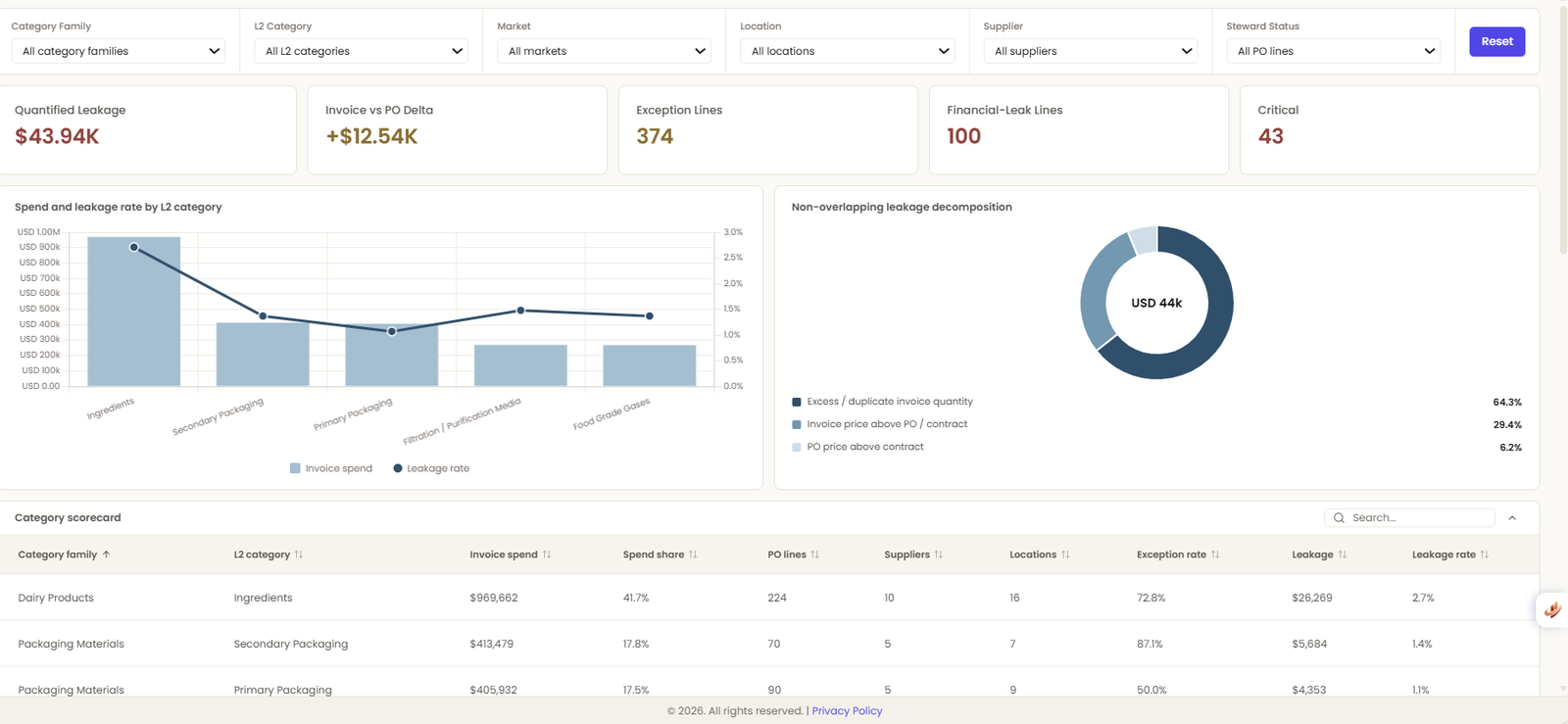
Post-award contract compliance is the continuous checking of POs, invoices and operational transactions against the commercial terms that govern them after a supplier agreement is signed. It confirms negotiated rates, discounts, rebates, fees, service levels and payment terms show up in actual execution — and it is how procurement stops contract leakage, the value lost between signature and payment.
How does Rivvun determine which amendment governs?
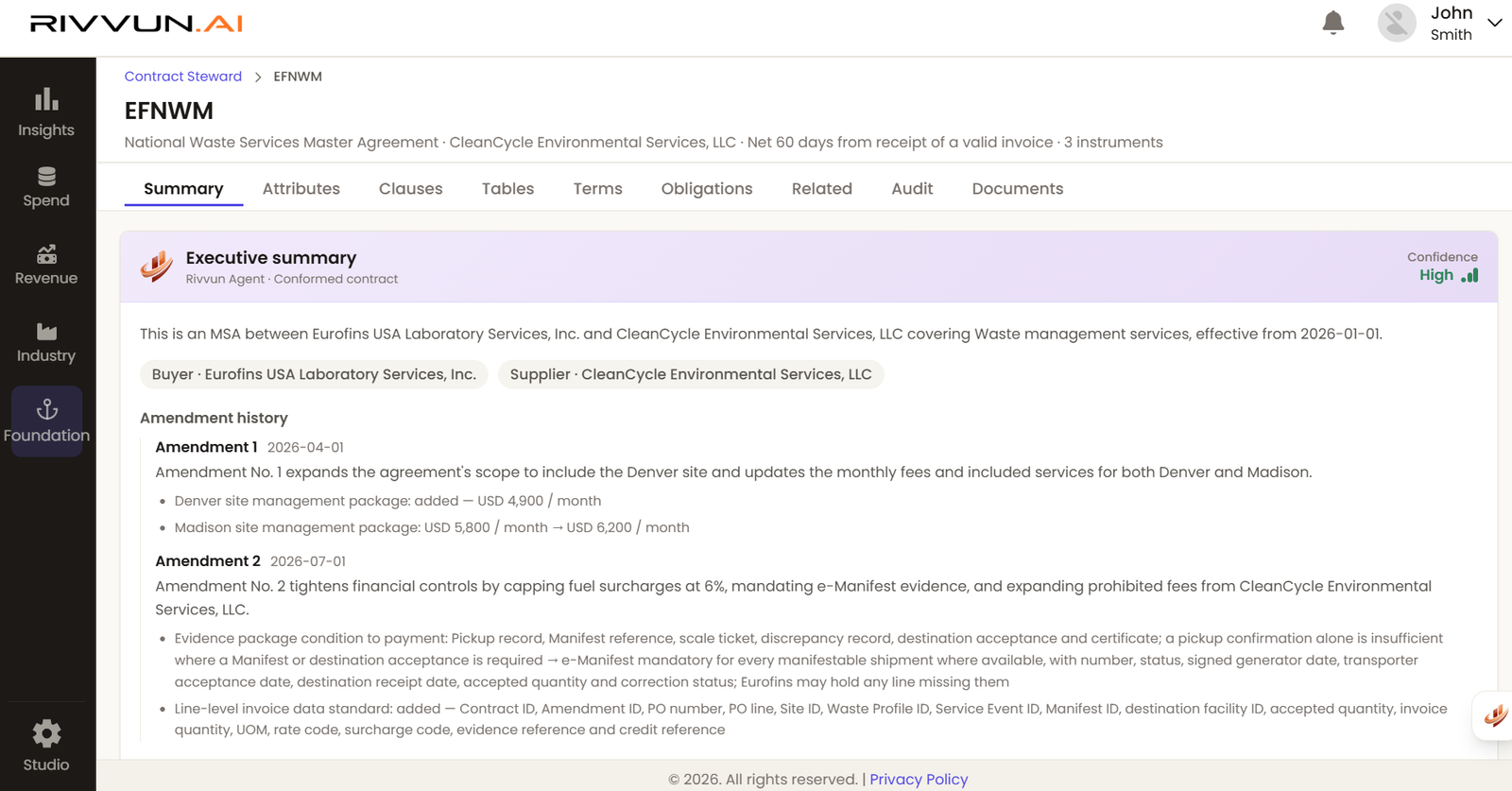
Contract Steward, Rivvun's contract compliance AI agent, evaluates the master agreement, amendments, schedules, side letters, effective dates and supersession language as one contract family. It records the governing source with clause-level evidence, rather than extracting conflicting fields from each document independently.
What happens when the PO and invoice match but violate the contract?
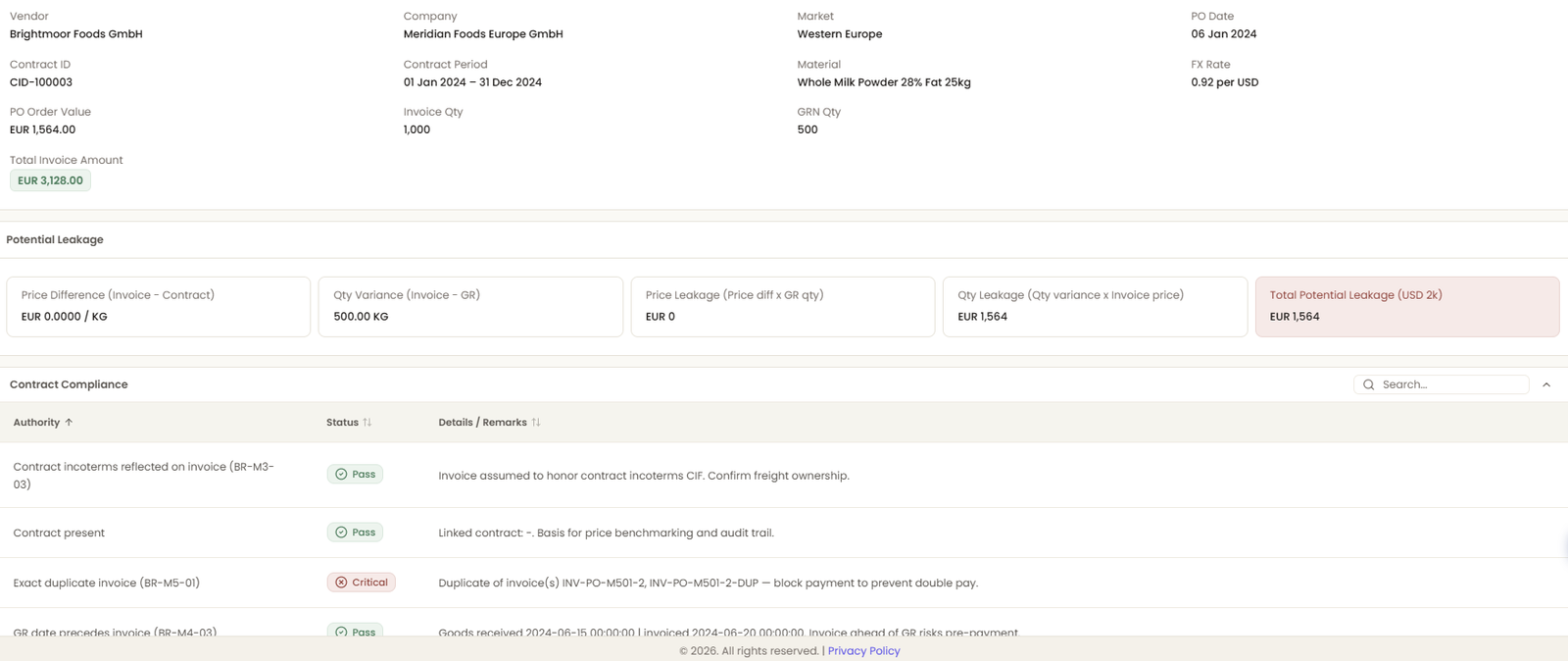
The contract wins. Matching proves the invoice agrees with the PO — not that either complies with the negotiated terms. Rivvun checks price compliance against the governing contract, quantifies the affected value and starts the right PO correction, invoice hold, supplier discussion or recovery action within your policy.
Does Rivvun replace CLM?
No. CLM remains the system for authoring, negotiation, execution and document lifecycle. Rivvun is contract compliance software for what happens after signature: it turns the signed terms into checks that run on every downstream PO and invoice line, and acts when a transaction fails them.
How is this different from contract AI extraction tools?
Extraction tells you what a document says. Rivvun tells you which term governs — reconciled across master agreement, amendments, schedules and rate cards, with effective dates, confidence and clause-level evidence — and then enforces it on every relevant transaction.
What is the Rivvun ontology?
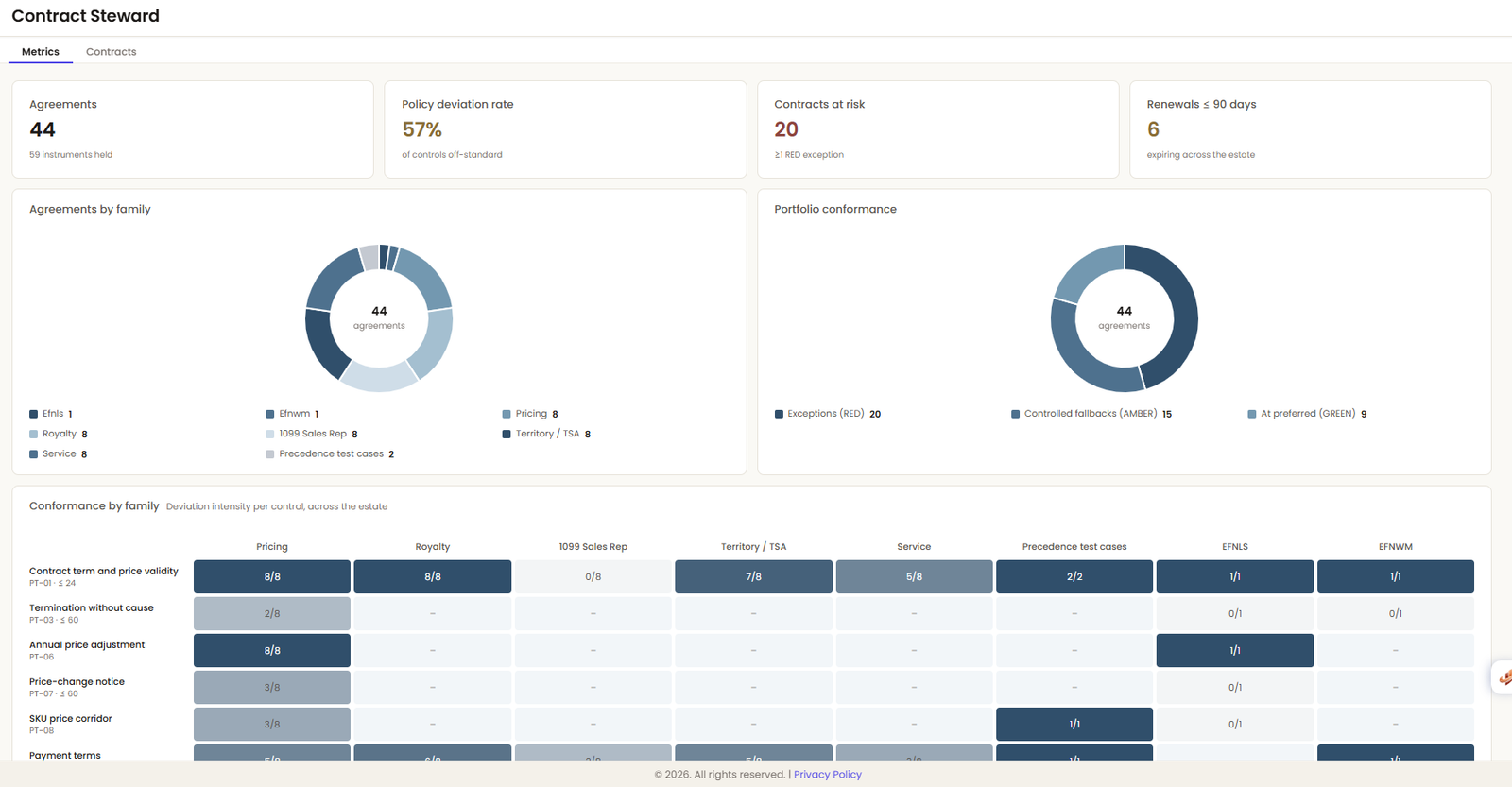
A structured model of contract types, commercial terms and industry knowledge. Every extracted term is resolved against it, so the same clause means the same thing across suppliers, entities and systems — and can be enforced the same way everywhere.
What happens when a term is ambiguous or missing?
It is scored, flagged and routed to a person for resolution, with the source clause attached. Contract Steward never enforces an unresolved term autonomously — ambiguity is a queue for human judgment, not a gap the agent guesses across.
How are contract savings measured?
Rivvun separates identified opportunity, validated contract variance, prevented contract value leakage, recovered cash and realized hard savings. Finance recognition occurs only when the outcome is supported by corrected transactions, supplier credits, payments or accounting evidence.