What is Invoice Assurance?
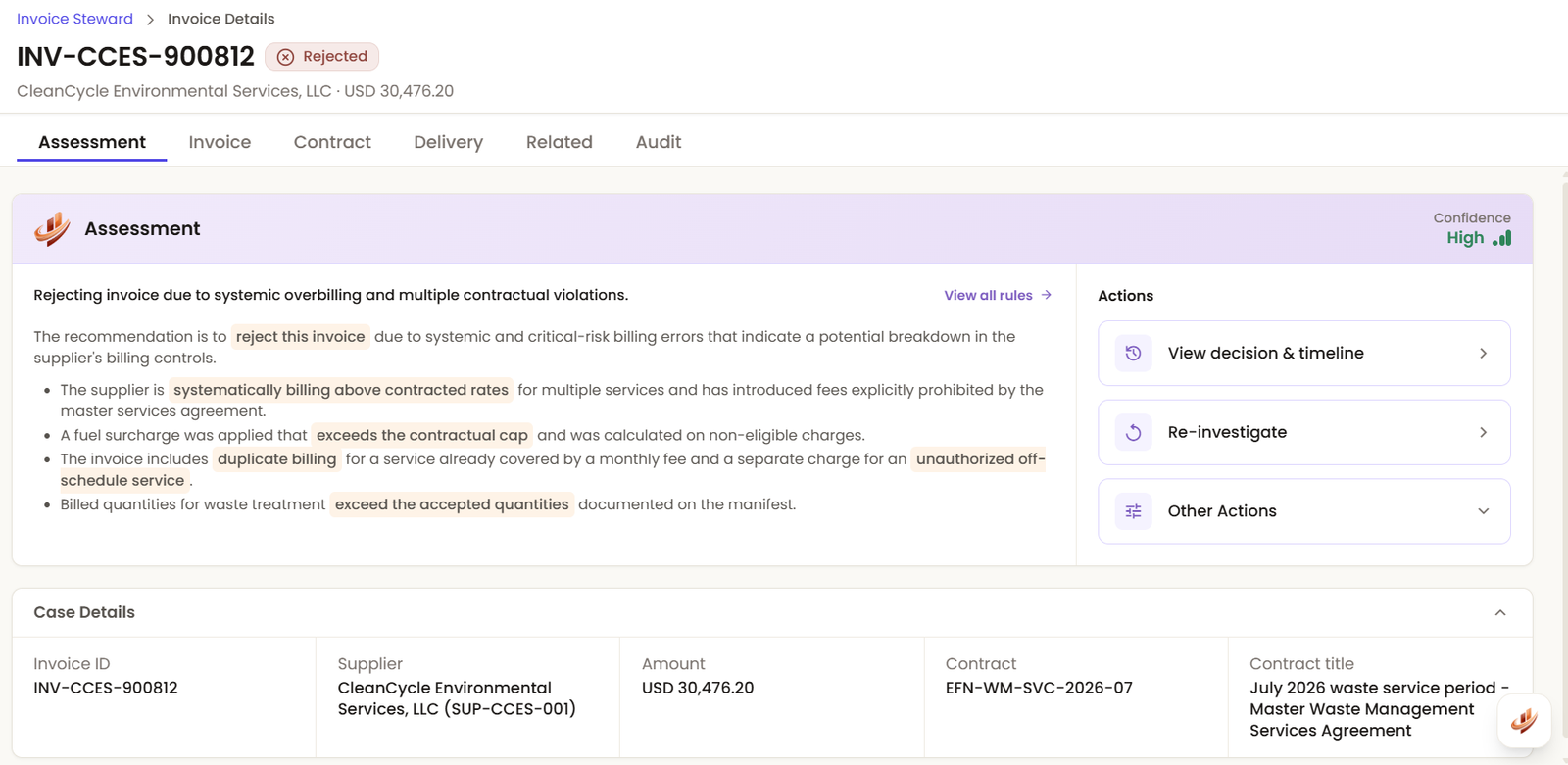
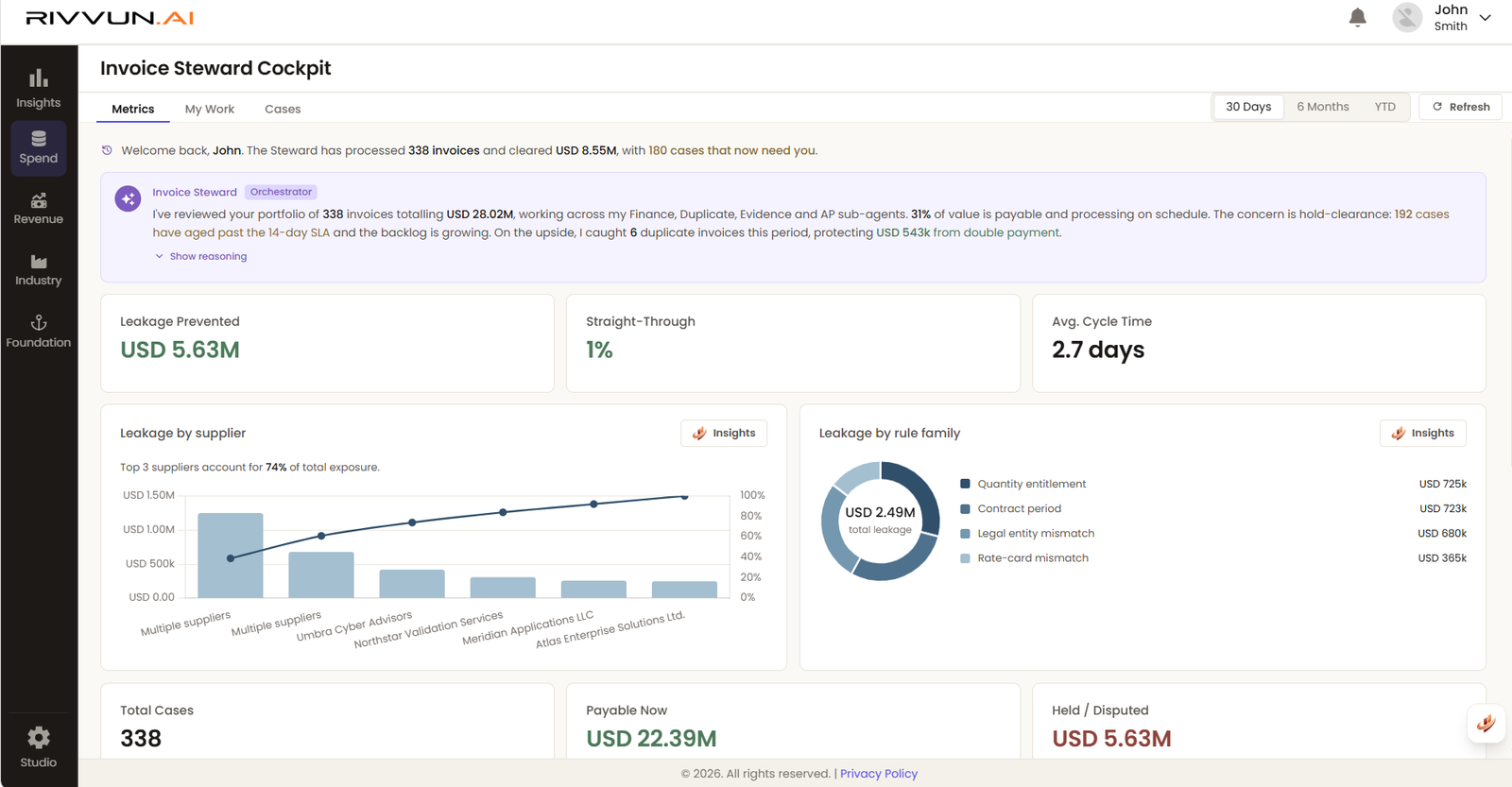
Invoice Assurance is Rivvun’s agentic AI invoice audit: contract-aware validation of supplier invoices before or during payment approval. Invoice Steward, the AI agent behind it, tests each charge against the governing contract, rate card, cap, milestone, credit, fee rule and delivery evidence to decide whether the line is commercially payable.
Isn't this what three-way match already does?
No. Match compares invoice, PO and receipt — and none of those documents carries the contracted rate, the cap, the credit or the service level. The match can pass while the charge breaches the contract. Rivvun adds the commercial authority the match never had.
How is Rivvun different from AP automation or anomaly detection?
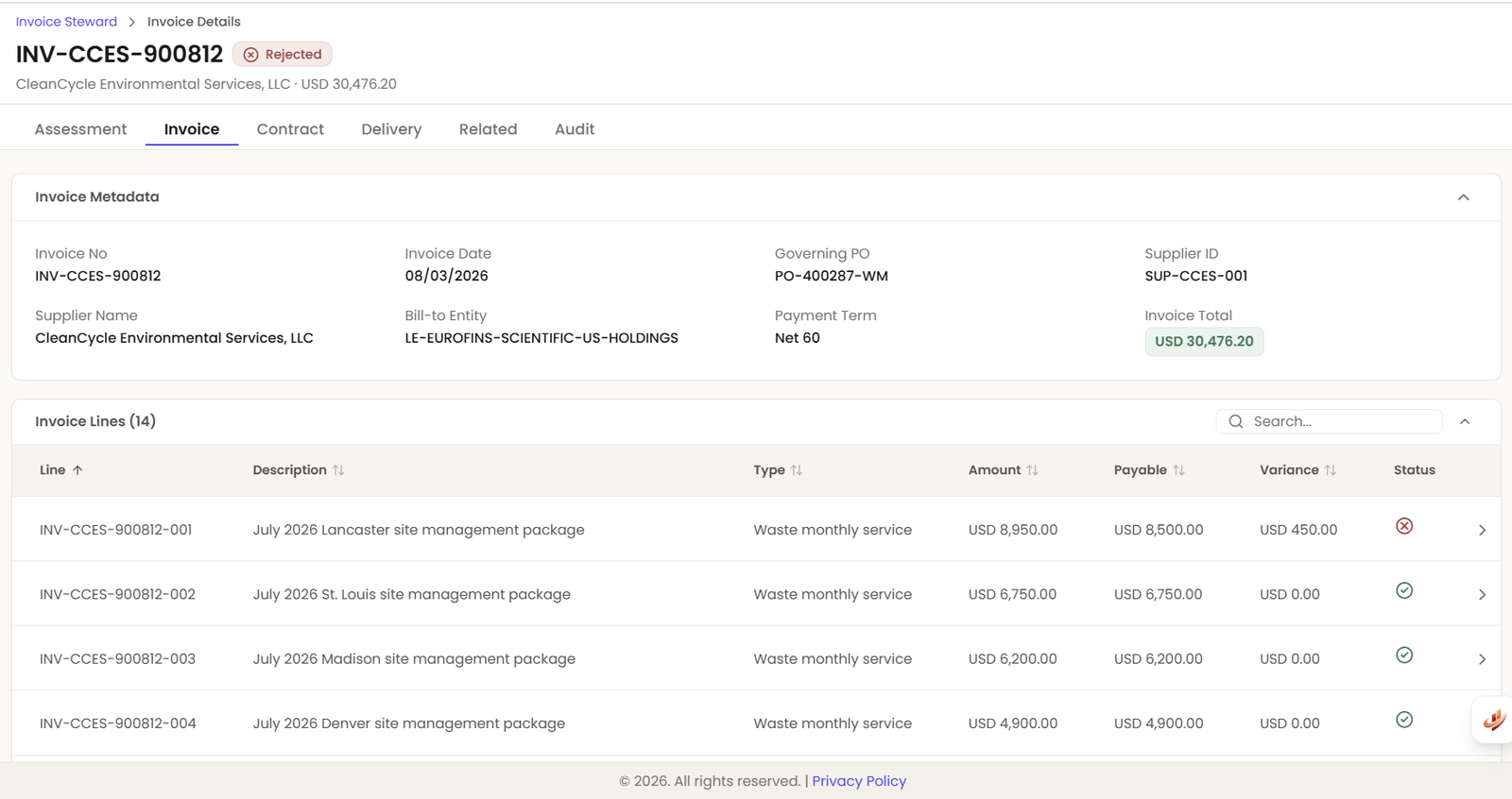
AP automation moves the invoice faster; anomaly detection flags statistical outliers. Neither can say whether a charge is contractually payable. Rivvun answers that question line by line — expected versus billed under the governing terms — and states the action that follows: clear, hold or route.
Is Invoice Assurance the same as invoice validation?
Invoice validation is a broad term covering format, tax, duplicate-payment and PO checks. Rivvun includes those, then adds commercial entitlement — what the supplier is actually allowed to bill: the specific rate, quantity, fee, milestone or service under the governing contract.
What is contract-to-invoice compliance?
Contract-to-invoice compliance is the validation of invoice charges against the governing supplier contract and its effective amendments, schedules and rate cards. It identifies when an invoice and PO agree with each other but conflict with the actual negotiated terms.
How does Invoice Assurance prevent AP overpayments?
Invoice Steward calculates the contractually payable amount, compares it with the billed amount and routes the variance through the configured approval and supplier-resolution workflow. Compliant amounts can proceed while material noncompliant charges are corrected or held within policy.
Is this a pre-payment invoice audit?
Yes. Invoice Assurance applies audit-grade commercial checks before payment where the evidence exists — a pre-payment invoice audit rather than a look-back. It also flags historical paid transactions that belong in Supplier Leakage Recovery, Rivvun’s post-payment recovery solution.
How is pre-payment assurance different from a recovery audit?
Pre-payment assurance stops a noncompliant amount before it leaves the enterprise; a recovery audit examines historical payments and chases a credit, refund or repayment afterwards. Rivvun runs both from the same governing evidence and control logic — one payment-integrity discipline across prevention and recovery.
How are services and non-PO invoices assessed?
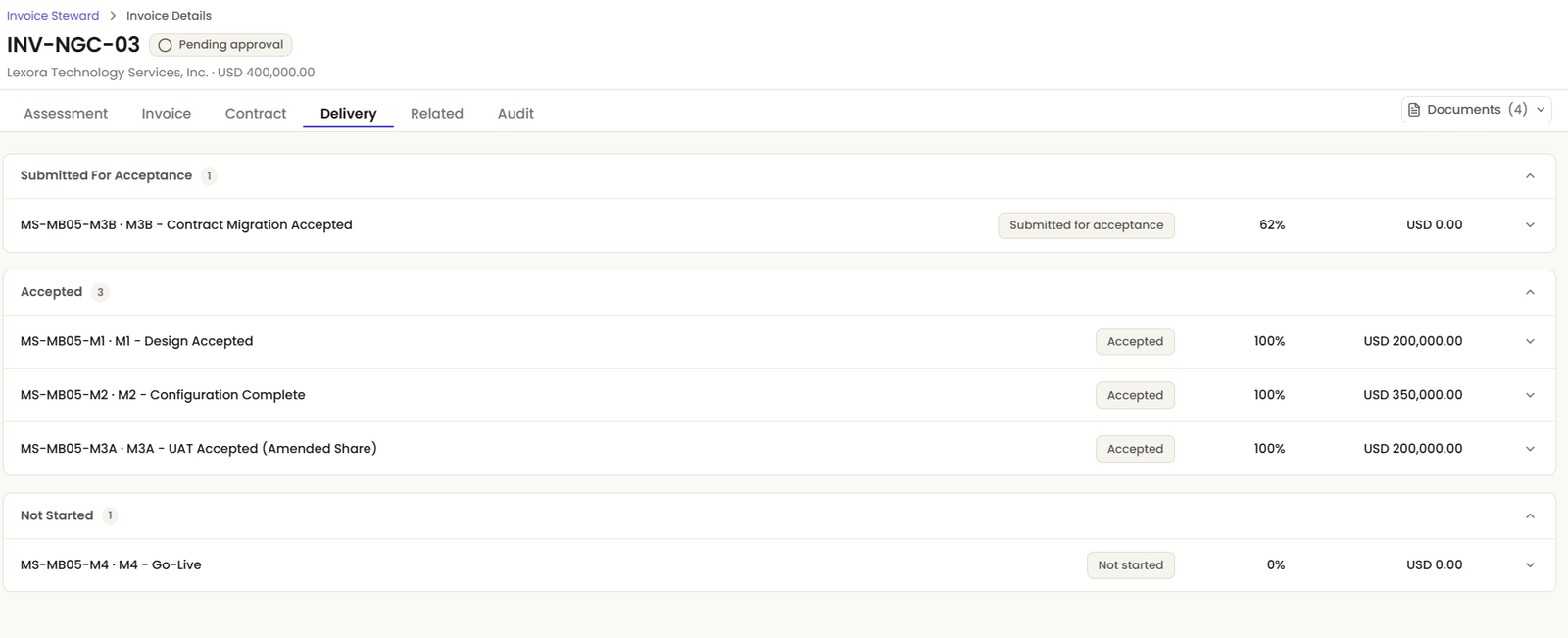
Rivvun links the invoice to the relevant SOW, rate card, milestone, timesheet, service entry, acceptance record, ticket or other operational evidence. Where the governing evidence is incomplete, the line is routed with the missing evidence identified rather than being automatically approved or rejected.
Can the agents hold or pay on their own?
Only within policy. Invoice Steward auto-clears compliant lines inside configured policy and confidence thresholds. Every consequential action — holding a payment, adjusting a charge, contacting a supplier — requires human approval, with segregation of duties enforced. The AI agent decides and prepares; accountable people approve.
How are savings from Invoice Assurance measured?
Identified variance, validated variance, prevented leakage, recovered value and realized hard savings are recorded separately. Prevented value requires evidence that the noncompliant amount was not paid. Recovered value requires a received credit, refund, repayment or offset.